

Researchers found that the city’s population retains high genetic diversity despite its small size,
highlighting its potential conservation value. Image credit: Uva FUNG
A new genomic study by researchers from the HKU School of Biological Sciences (SBS) has found that Hong Kong’s introduced population of Yellow-crested Cockatoos retains unexpectedly high genetic diversity and could serve as a genetic reservoir for this critically endangered species. Published in Evolutionary Applications, the study also underpins a new conservation initiative with local schools to install artificial nest boxes and monitor this rare urban population.
Hong Kong is home to around 200 Yellow-crested Cockatoos—about 10% of the remaining global population. Although this urban population is small and isolated, it has so far avoided the severe genetic decline often expected in such cases. Some individuals may even carry genetic lineages that have disappeared from parts of the species’ native range in Indonesia.
To understand how this population contributes to the global conservation of this species, researchers in the Merilä Lab at HKU SBS sequenced the whole genomes of Hong Kong’s cockatoos and compared them with native-range populations in Indonesia. Their analysis examined the birds’ genetic health, origins and potential conservation value, highlighting several key findings:
1. High Genetic Diversity: Hong Kong’s cockatoos show genetic diversity comparable to other wild parrot populations.
2. Mixed Subspecies Heritage: The population carries genetic signatures from all Yellow-crested Cockatoos subspecies, with many individuals showing mixed ancestry.
3. Preservation of Lost Lineages: Over half of the sampled birds carry a maternal lineage linked to Lombok or nearby areas, where the species may now be locally extinct.
4. Signs of Inbreeding: Some individuals show elevated inbreeding levels, highlighting the need for continued monitoring.
5. Small Breeding Population: The number of effectively breeding individuals remains low, raising concerns for the population’s long-term survival.
6. Genetic Rescue Potential: Hong Kong’s cockatoos could potentially support future genetic rescue efforts for declining native populations in Indonesia.
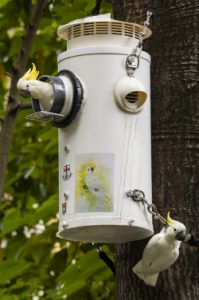
A pair of cockatoos uses the nest box installed on the St. Louis School campus in Sai Ying Pun. Photo credit: Winster Wong.
“Hong Kong’s population presents a natural, 60-year test case for the genetic impacts of interbreeding Yellow-crested Cockatoos subspecies,” said Dr Astrid ANDERSSON of HKU SBS, lead author of the study. “Instead of dismissing urban, introduced populations as ecologically redundant, we should view them as potential ‘Biodiversity Ark’ that can actively help prevent extinction.”
The native population of Yellow-crested Cockatoos in Indonesia has declined to fewer than 2,000 birds due to historic over-trapping for the pet trade and habitat loss. However, the team cautions that any future translocation would require careful risk assessment, threat mitigation, biosecurity planning and long-term monitoring.
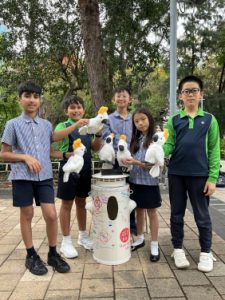
As part of the conservation project, the team is working with local schools to install specially designed artificial nest boxes, providing safe nesting sites for Hong Kong’s urban cockatoos. One of the boxes has been sponsored by Quarry Bay School and is installed in Victoria Park. Photo credit: Ceri Hill.
Building Safe Homes for Hong Kong’s Urban Cockatoos
As part of the conservation project, the team is working with local schools to install specially designed artificial nest boxes. Modified from Australian prototypes to better withstand Hong Kong’s humid climate, the boxes are equipped with internal cameras, allowing researchers and students to monitor breeding behaviour without disturbing the birds.
To date, four nest boxes have been installed through partnerships with three schools: The ISF Academy in Pok Fu Lam, St. Louis School in Sai Ying Pun, and Quarry Bay School (ESF), with its box installed in Victoria Park. An additional ten nest boxes have been installed in urban parks around Hong Kong island, with the support of management authorities.
“The loss of over 60% of the cockatoos’ previously used nest sites in natural tree hollows in Hong Kong due to typhoons and pruning has created a housing crisis for these birds,” said Dr Andersson. “By partnering with local schools, we are providing safe havens for breeding so we do not lose this globally important urban population.”
“This initiative is a great opportunity to engage the next generation in urban conservation and hands-on conservation action,” said Harry WONG, arborist, designer and collaborator on the project. “Students can help build and install the nest boxes while learning about urban wildlife design.”
Video footage from inside the nest box shows the cockatoos’ breeding behaviour without disturbing the birds. The video is available here: https://youtu.be/CbjEC7HNOVg
Video credit: @HK_cockatoo_watch.
A video interview with Dr Astrid Andersson on her research and the team’s nest-box conservation efforts is available here: https://youtu.be/v0MsLsdan1E
Video credit: The University of Hong Kong
For more details, please refer to the journal paper “Assessing the Genetic Health and Conservation Value of an Introduced Urban Population of a Critically Endangered Parrot” published in Evolutionary Applications.
News Links: 1, 2, 3, 4, 5, 6, 7, 8, 9, 10
香港大學(港大)生物科學學院一項研究發現,在香港落戶逾六十年的小葵花鳳頭鸚鵡族群,保留了出乎意料的高度遺傳多樣性,部分個體甚至可能保留了在印尼部分原生地區已經消失的遺傳譜系,或可成為這一極危物種的保育資源。該研究已於《Evolutionary Applications》發表。
香港現時約有200隻小葵花鳳頭鸚鵡,佔全球餘下族群約10%。雖然香港族群規模細小且相對孤立,但至今並未出現小型孤立族群常見的嚴重遺傳衰退。港大團隊以此研究作為基礎,與本地學校合作推動保育,為小葵花鳳頭鸚鵡設置人工巢箱,並持續監測其族群狀況。
DNA解碼揭保育價值
港大生物科學學院Merilä實驗室的研究人員為香港小葵花鳳頭鸚鵡進行全基因組測序,並與原生分布地區的族群作比較。研究分析了這些雀鳥的遺傳健康、來源及潛在保育價值,得出以下主要發現:
1. 高遺傳多樣性:香港小葵花鳳頭鸚鵡的遺傳多樣性與其他野生鸚鵡族群相若。
2. 混合亞種血統:香港族群帶有多個小葵花鳳頭鸚鵡亞種的遺傳特徵,不少個體更呈現混合血統。
3. 保留已消失譜系:逾半數採樣個體帶有與印尼龍目島或鄰近地區相關的母系譜系,而該物種在相關地區可能已局部滅絕。
4. 近親繁殖跡象:部分個體顯示較高近親繁殖水平,反映有需要作持續監測。
5.有效繁殖族群細小:實際參與繁殖的個體數量仍然偏低,或會影響族群的長遠存續。
6.保育潛力:香港小葵花鳳頭鸚鵡未來或可為印尼原生族群提供重要基因資源,幫助提升其遺傳多樣性。
該研究的第一作者、港大生物科學學院Astrid ANDERSSON博士表示:「香港的小葵花鳳頭鸚鵡族群在過去約60年間於城市環境中繁衍,為我們了解小葵花鳳頭鸚鵡不同亞種之間雜交所帶來的遺傳影響,提供了一個難得的自然研究案例。城市中的引入族群並非生態系統裏的多餘之物;相反,牠們可被視為潛在的『生物多樣性方舟』,有助防止物種走向滅絕。」
團隊表示,印尼的原生小葵花鳳頭鸚鵡族群因過往被大量捕捉作寵物貿易,加上棲息地流失,數量已降至少於2,000隻。即便如此,研究團隊提醒,任何未來的遷移或野放安排均不宜急進,必須先進行審慎的風險評估、威脅緩解、生物安全規劃及長期監測。
團隊攜手學校建構安全棲所
作為保育項目的一部分,研究團隊正與本地學校合作,安裝特別設計的人工巢箱。巢箱參考澳洲原型設計,並經改良以適應香港潮濕的氣候;箱內亦設有攝影機,讓研究人員及學生可在不干擾雀鳥的情況下,觀察其繁殖行為。
至今,團隊已與三間學校合作,合共安裝四個人工巢箱,包括位於薄扶林的弘立書院、西營盤的聖類斯中學,以及英基學校協會鰂魚涌小學;其中鰂魚涌小學設置的巢箱設於維多利亞公園。另外十個巢箱亦已在管理部門的支持下,安裝於港島多個市區公園。
Andersson博士表示:「香港因颱風及樹木修剪而失去超過六成天然樹洞,而這些樹洞正是小葵花鳳頭鸚鵡的重要天然巢穴,因此令牠們面對『住屋危機』。透過與本地學校合作,我們正為牠們提供安全的繁殖空間,避免失去這個在全球保育上具有重要意義的城市族群。」
項目合作者、樹藝師兼巢箱設計者黃嘉漢表示:「這項計劃為年輕一代提供了參與城市保育和實踐保育行動的寶貴機會。學生可協助製作及安裝巢箱,同時學習城市野生動物設計的相關知識。」
巢箱內置攝錄機影片:https://youtu.be/CbjEC7HNOVg 影片來源:@HK_cockatoo_watch.
港大研究團隊保育工作影片:https://youtu.be/v0MsLsdan1E 影片來源:香港大學
有關研究詳情,請參閱刊於《Evolutionary Applications》的期刊論文〈Assessing the Genetic Health and Conservation Value of an Introduced Urban Population of a Critically Endangered Parrot〉。