|
|
****JavaScript
web menu drop down DHTML menu generated by NavStudio. (OpenCube Inc.
- http://www.opencube.com)****
|
|||
Measuring and Evaluating BiodiversityIn 1982, Terry Erwin came up with a provocative estimate that there were 30 million arthropod species world-wide [Erwin 1982] .
There are various ways that biodiversity be measured and evaluated, and also monitored. To all intents and purposes, most measures of biodiversity are concerned with species diversity, though many other factors may be used in the assessment. |
|||
|
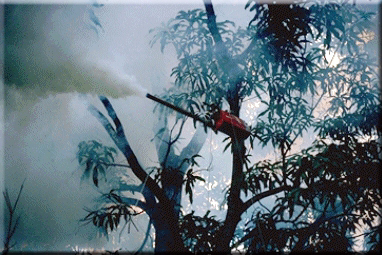
Canopy fogging |
Erwin's CalculationsCanopy insects, from a seasonal tropical rainforest in Panama, were
collected by [Erwin 1982] Further Previous estimates had suggested there were only 2 - 3 million species, so Erwins calculations were quite a revelation. Many authors, e.g. [Stork 1988] , have challenged
|
|
Estimating Species NumbersMethods for evaluating global species numbers include:
|
||
Why Estimate Species Numbers?
So, solving the question "how many species are there?" should not only lead to an improved understanding of the distribution of biodiversity but should also lead to improved predictions as to its fate [Stork 1993] . |
||
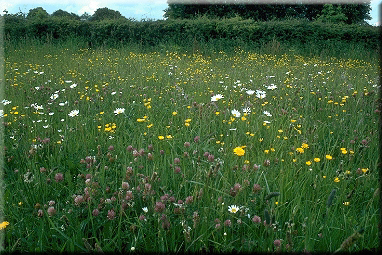 |
Measuring BiodiversitySpecies The use of modern Ecological diversity is often evaluated in terms of the richness and
abundance of the component species in any particular area, coupled with
a description of the |
|
|
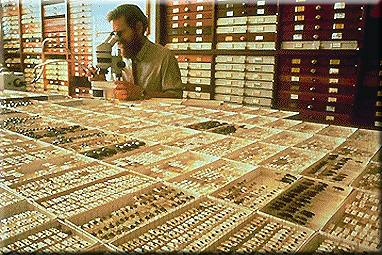
Insect species are often used to monitor biodiversity Describing and providing inventories of global species diversity is the essential work of systematic biologists and ecologists. |
Biodiversity Inventories and MonitoringLarge-scale biodiversity assessments can be provided by global initiatives to discover, describe and classify the world's species, such as Systematics Agenda 2000 [SA 2000] , which has a mission to:
More local information often comes from using rapid biodiversity assessment techniques (RBAs), which can provide quick and cost-effective biodiversity assessments. Rapid biodiversity assessments may provide information on:
|
|
|
|
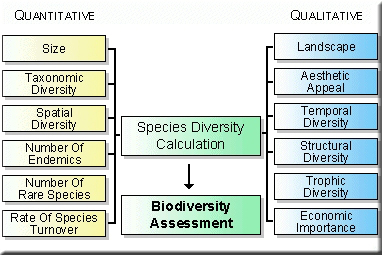
Quantitative and Qualitative Measures of BiodiversityAlthough most measures of biodiversity are concerned with Even if these factors cannot be |
|
 fogging.